 An institution of COMESA ↗

From understanding to capability.
The Energy Training Centre is the region’s home for practical, practitioner-led training in energy regulation. Participants learn on simulators and real COMESA cases, and every course ends with a piece of work they can use in their institution the following Monday.
Knowing about something is not the same as being able to run it
The best regional evidence shows a consistent pattern. Regulators’ confidence falls at each step from understanding a topic to developing, maintaining and monitoring it. We designed every course to close that gap.
Source: regional regulatory Training Needs Assessment (RERA, 2014) and curriculum report (2016). The Institute replaces this with a COMESA-wide survey in Year 1.
Built for busy regulators with thin teams
A work product, not an exam
Leave with a defensible tariff memo, a completed dispatch schedule or a draft licence condition, graded by faculty.
Our region’s cases
A growing bank of real, anonymised cases from COMESA Member States, refreshed every year with peer review findings.
Simulators and labs
Dispatch, market clearing and grid integration are learned on simulators, not in webinars.
One region in the room
Anglophone, Francophone and Arabophone participants learn together at technical, advanced and executive levels. Foundation courses run in parallel language streams.
Short and modular
Three to five days per course. High yield and easy to release staff for, with no long residential programmes.
Practitioner faculty
Taught by serving regulators, certified regional trainers and the Institute’s own hydrogen and peer review experts.
Sixteen courses. Four tracks.
Five courses are new and target the gaps the regional evidence ranked weakest. Choose a track, then open any course for its full outline.
Searchable catalogueThe baseline every regulatory professional needs, whatever department they work in.
Foundations of Cost-of-Service Tariff Design for African Electricity Markets
Tariff-setting rebuilt from the ground up using the region’s own utility cost data.
Regulatory Independence, Institutional Design and Board Governance
The governance fundamentals that decide whether every other regulatory function can be exercised independently.
Consumer Protection, Quality of Supply and Dispute Resolution
Service standards benchmarked on regional reliability data, with practical dispute-resolution skills.
Subsidies, Social Tariffs and Policy Trade-off Analysis
The two gaps the regional evidence ranked first and second, taught together because in practice they are one problem.
Regulatory Impact Assessment, Evidence and Statistical Analysis
How a regulator builds, tests and defends the evidence behind a decision.
The region’s most complex regulatory functions: network access, cross-border trade, procurement, system operation and metering.
Grid Codes, System Operation Rules and Third-Party Access Design
Participants work inside a simulated third-party-access dispute instead of hearing a lecture about one.
Regulating Cross-Border Power Trade and Wheeling
Built around the region’s own power pools, with content that exists nowhere else.
Renewable Energy Procurement, Auction Design and PPA Structuring
Structured around the procurement routes the region’s developers actually use.
System Operations: Scheduling, Dispatch and Interconnected Operations
The weakest measured competency in the region, taught where it can only be taught: on a control-room simulator.
Metering, Network Losses and Revenue Protection
Where the money leaks, and how a regulator measures it rather than being told about it.
Technical fluency in the technologies today’s regulatory frameworks were never written for.
Utility-Scale Solar and Wind: Grid Integration, Curtailment and Regulatory Design
For a region adding variable renewables quickly to grids not designed for them.
Green Hydrogen Economy: Regulatory Frameworks, Certification and Market Design
Preparing regulators for a technology that fits no existing licensing category. Co-taught with the Green Hydrogen Centre.
Energy Storage, Flexibility Markets and Distributed Energy Resources Regulation
Regulating the technologies that make a high-renewable grid work.
For senior technical staff and institutional leaders, and for the region’s own bench of trainers.
Regulatory Finance: Revenue Requirement, WACC, Credit Metrics and Investment Climate
Hands-on financial modelling with real, anonymised utility financials, including a full day on credit ratings.
Leading a Modern Energy Regulator
A closed-door peer roundtable for the people who run regulatory institutions.
Regional Trainer Certification (Train-the-Trainer)
The course that makes the curriculum the region’s own property instead of a service it keeps buying.
Where theory meets the control room
Four simulation facilities on the Institute’s training floor, each tied to named courses. A laboratory is commissioned only when the course that uses it is already enrolling.
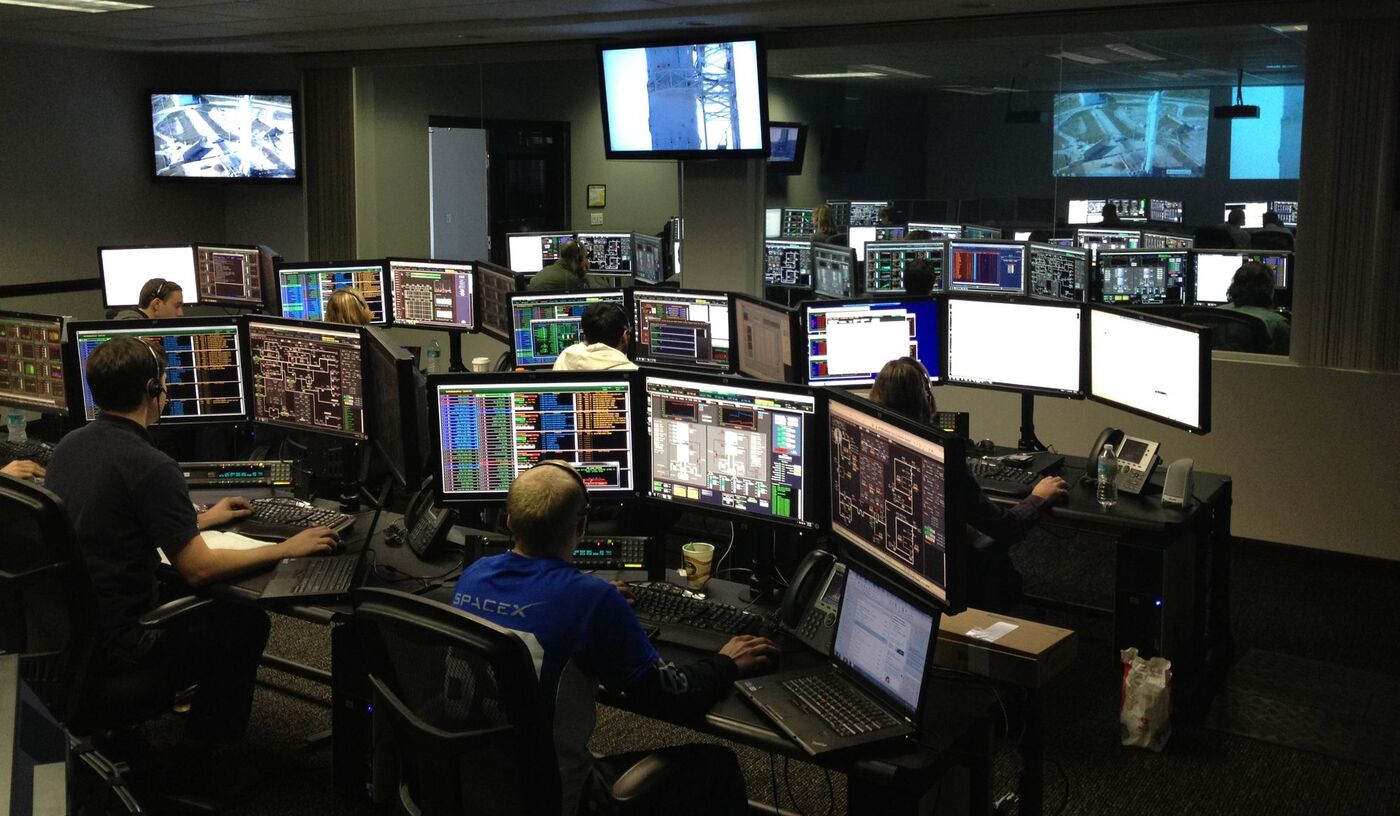
Power Systems Planning Simulator
Generation and transmission expansion, hosting capacity, long-term price modelling.
CEI-201 · CEI-301 · CEI-401SCADA & Power Pooling Lab
Supervisory control, interconnected operation, cross-border pooling and dispatch.
CEI-201 · CEI-202 · CEI-204Certified COMESA Energy Regulator
The region’s professional credential for energy regulators. Build it course by course, prove it with a capstone, and keep it current with annual professional development.
Foundation
CEI-101, compulsory for every candidate.
Core elective
One of CEI-102, 103, 104 or 105.
Technical elective
One Track B course, CEI-201 to 205.
Further elective
One more course from any track.
Capstone
A work product assessed by the Academic and Technical Board.
Renewable Energy Transition endorsement
Complete all three Track C courses (CEI-301, 302 and 303) on top of the CCER.
System & Network Operations endorsement
Complete CEI-201, 204 and 205, the cluster of skills the region measured as weakest.
CEI Executive Leadership credential
Awarded on completion of CEI-402, by nomination, for heads of regulatory institutions.

A credential that says: this person can do the job, not just describe it.
- Stackable: start with one course and build toward the credential
- Recognised across all 21 COMESA Member States
- Renewed annually with at least one professional development activity
A curriculum the region owns
Training should be delivered by the region’s own regulators, not bought in again every year. That is now a target with a date attached.
- CEI-403 certifies trainers only after they co-deliver a live session under observation
- A named faculty champion keeps each track current
- Half of all foundation course days delivered by certified regional trainers by Year 4

Steered by measured need, every year
The catalogue is not fixed. It responds to what the region’s regulators actually need.
Survey
A COMESA Capacity Needs Survey across all 21 Member States, every second year.
Triangulate
Results checked against each year’s peer review cluster scores.
Publish
The annual course calendar is published at least six months ahead, so institutions can plan and budget.
Evaluate
Six to twelve months later we ask: did the participant’s institution change its practice?
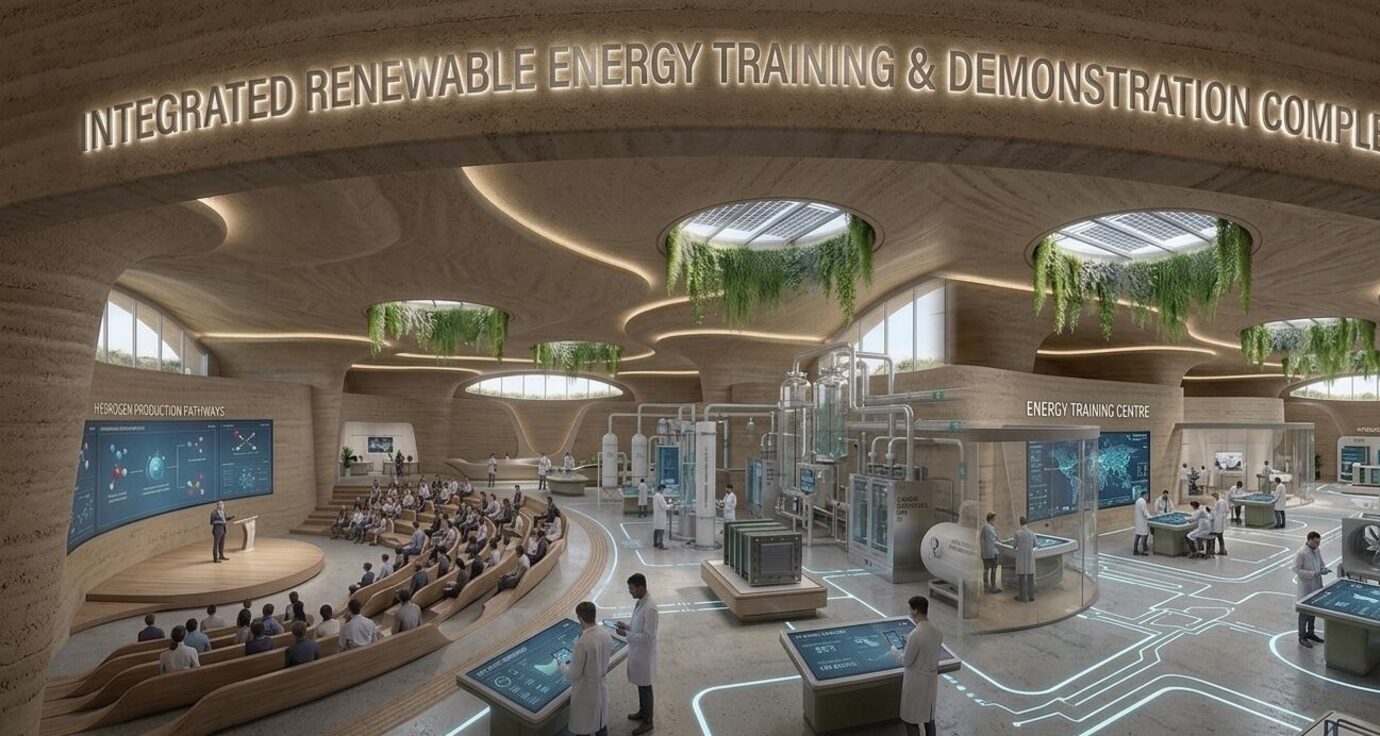
Illustrative concept of the training and demonstration concourse.
Online today. Lusaka tomorrow. Across the region always.
- Online and blended courses open from the first year
- In-person sessions rotate among Nairobi, Kampala, Lusaka and Cairo until the campus opens
- The Lusaka campus will host simulator courses and in-person sessions once commissioned
- Site visits are hosted at operating plants and control centres across the region
Training, plainly answered
Who can enrol?
Is there a written examination?
In which languages are courses offered?
How much do courses cost?
How do I become a certified trainer?

Build your institution’s capability
Register interest in a course, nominate staff for the next cohort, or request a tailored programme for your institution.